HWDA, CELEBRATING 50 YEARS: 1976 – 2026. WELCOME TO THE LATEST NEWSLETTER, JULY 2026
Current Newsletter: July 2026
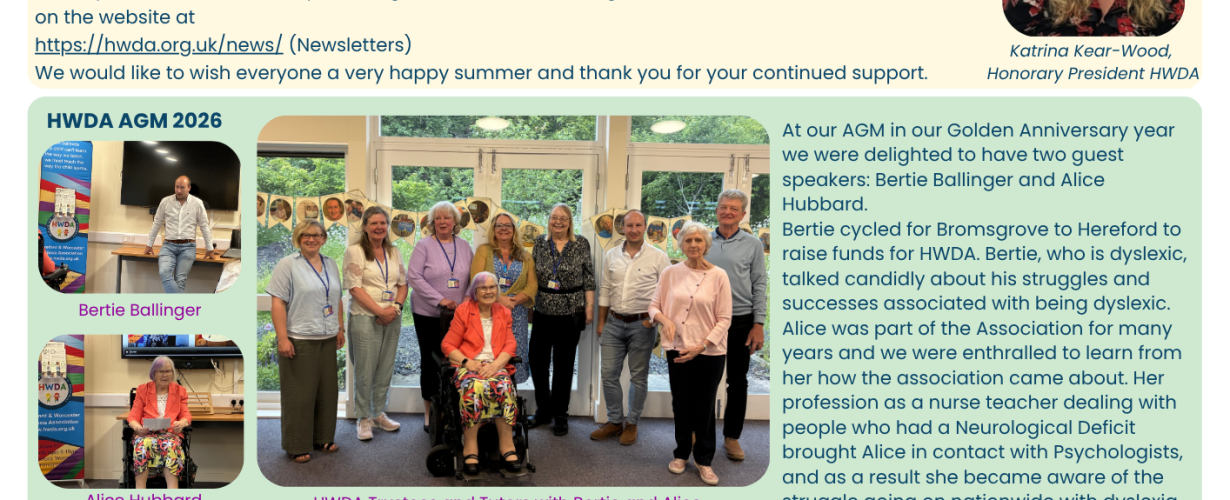
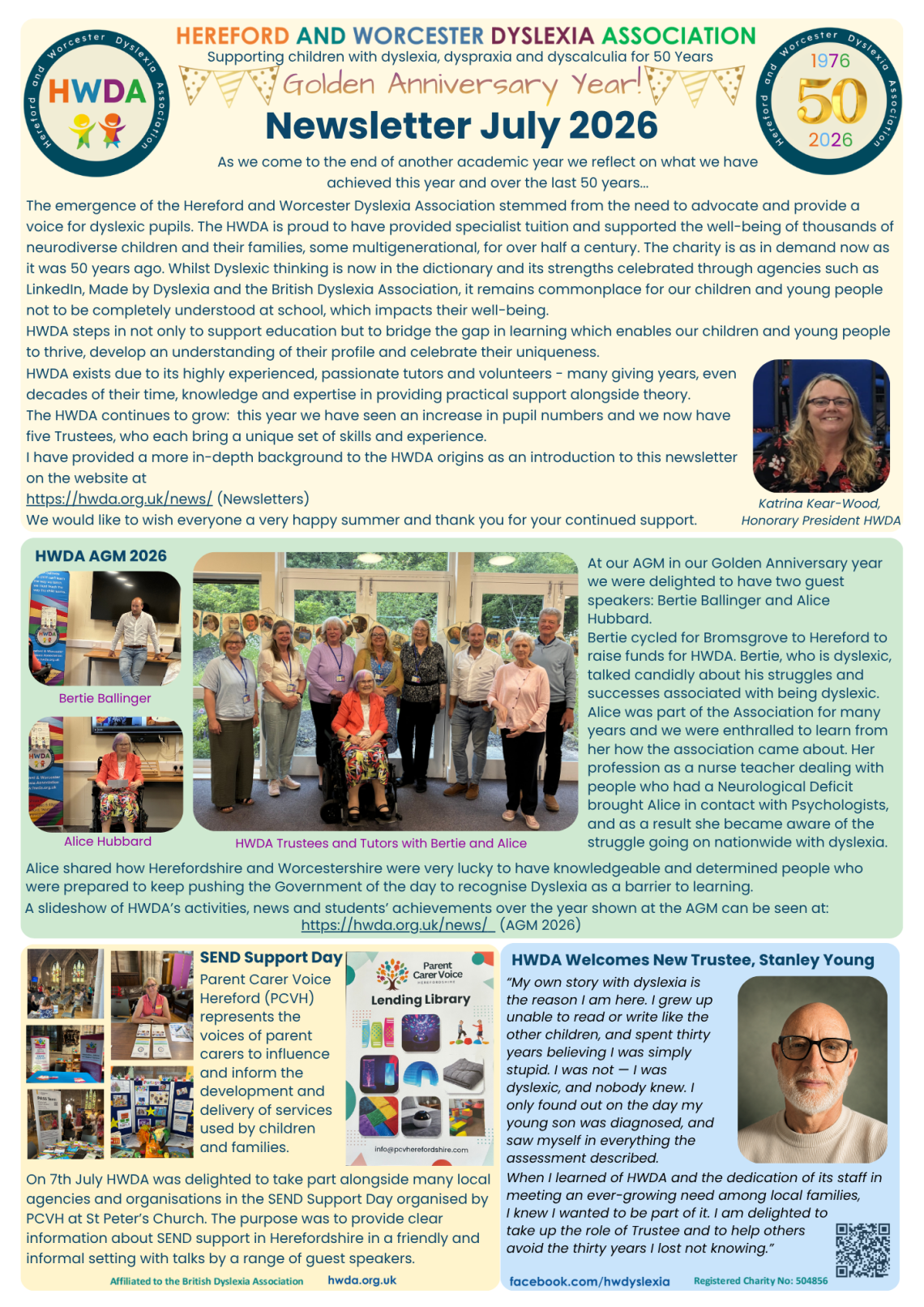
At our AGM in our Golden Anniversary year we were delighted to have two guest speakers. Bertie Ballinger, who previously cycled for Bromsgrove to Hereford to raise funds for HWDA. Bertie, dyslexic himself, talked candidly about his struggles and successes associated with being dyslexic.
Alice Hubbard, our second guest speaker was part of the Association for many years and we were enthralled to learn about how the association came about. Her profession as a nurse teacher dealing with people who had a Neurological Deficit brought Alice in contact with Psychologists, she became aware of the struggle going on nationwide with dyslexia. Laterly teaching at Evesham College, working with Les Kewley who was managing a Unit for people with Acquired Brain injury. Alice’s son is severely Dyslexic and his school’s SENCO was Les Kewley.
Alice shared how Herefordshire and Worcestershire were very lucky to have three knowledgeable and determined people who were prepared to keep pushing the Government of the day to recognise Dyslexia as a handicap to learning. Victor Booth was Chief Inspector of English.Margaret Newton an Educational Psychologist and Tim Miles who was The Professor of Psychology at Bangor University. Between them they submitted many Green Papers which were rejected until eventually their recommendations were accepted and became a white paper and passed into law in 1981. In the meantime Victor was instrumental in setting up 9 dyslexia units in schools across both counties these were managed by Les Kewley. In addition to all this he was instrumental in establishing the RSA Diploma SpLD for tutors and teachers who were working in the field. Margaret Newton was the Chief Assessor of the Diploma. The first cohort of students graduated in 1986. Val Martin (who set up and ran the Worcester Workshop) was one of these.The course was run at two centres Evesham College with Grace McQuaid as tutor and at Watford with Violet Brand as tutor.
From here many workshops came into existence, but all these years later we still come up against barriers which allow Educational Authorities to refuse children the right to personalised teaching.
Alice shared she thinks HWDA should stand for Victor, Tim and Margaret who made the all this happen.
HWDA exists due to its highly experienced, passionate tutors and volunteers
By Katrina Kear-Wood, Honorary President HWDA
many giving years, even decades of their time, Val Martin aforementioned, others after their own retirement from the Learning Support Teams at the LA, Victoria Crivelli and Linda Adey ( supported by her husband Geoff) who retired after 30 years, to return recently when the charity was in need. Victoria Crivelli, set up the previous invaluable support group in Worcester , with Frances Browne, educating professionals and parents alike, with guest speakers and their own knowledge and expertise, providing support, alongside theory.
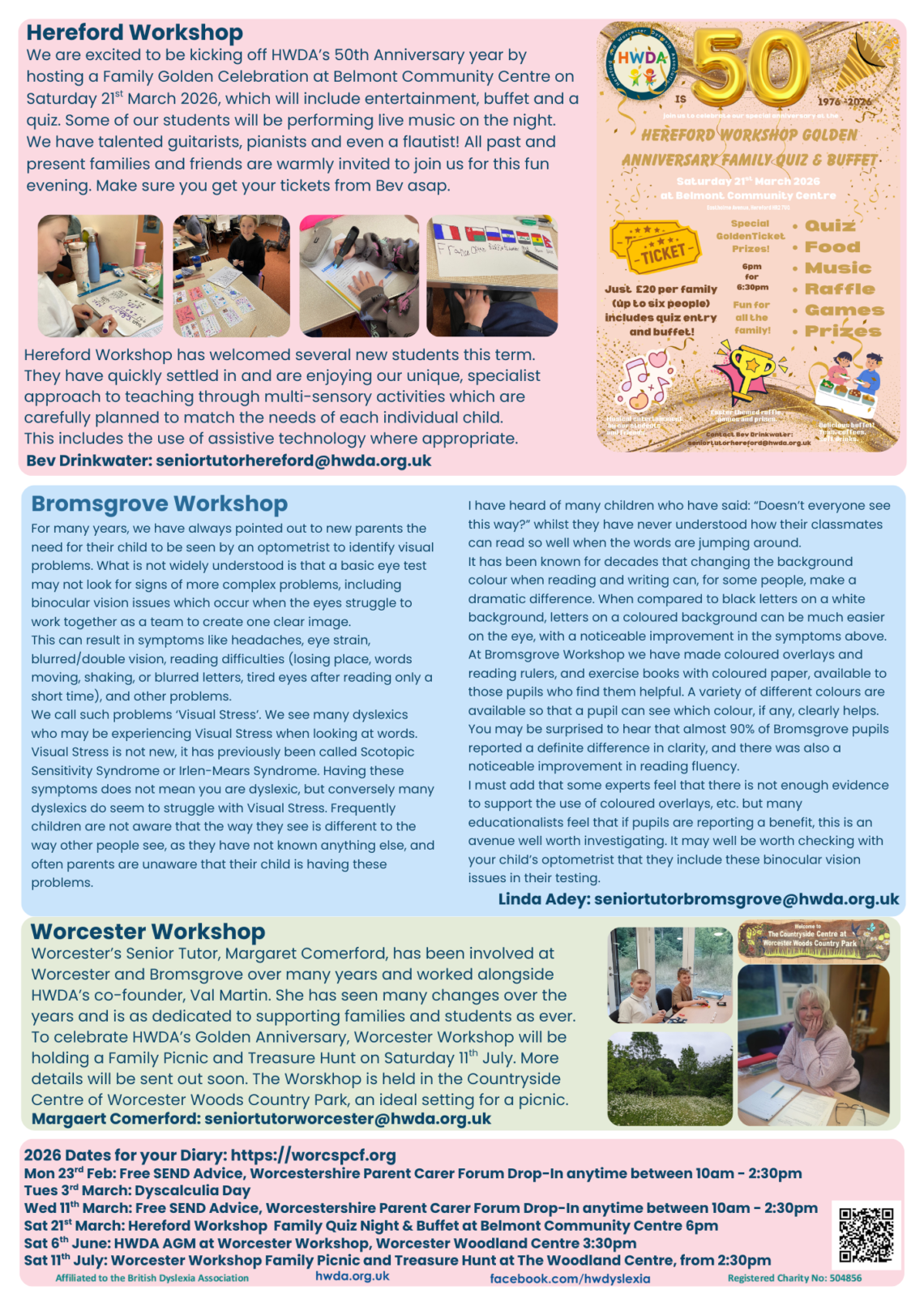
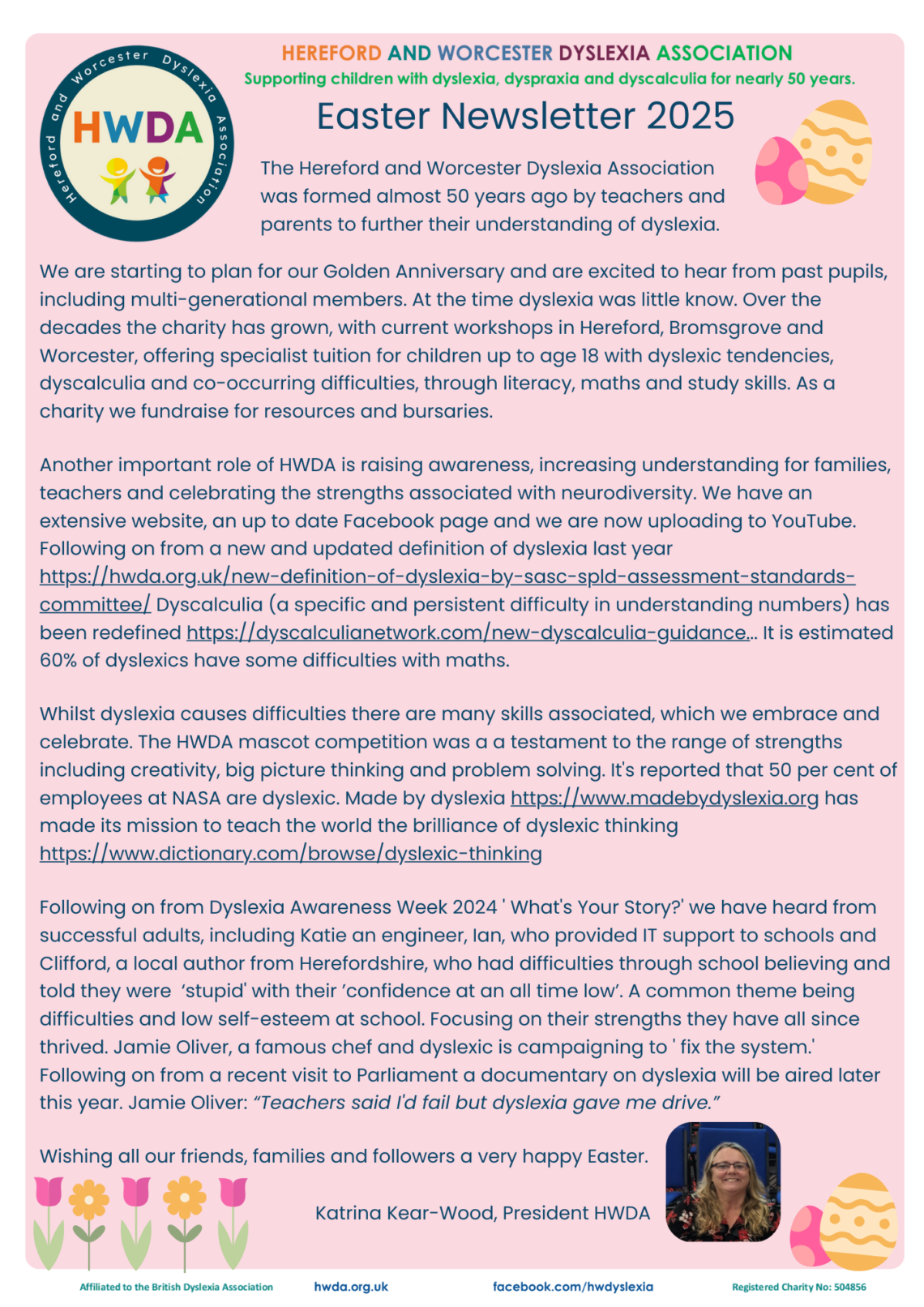
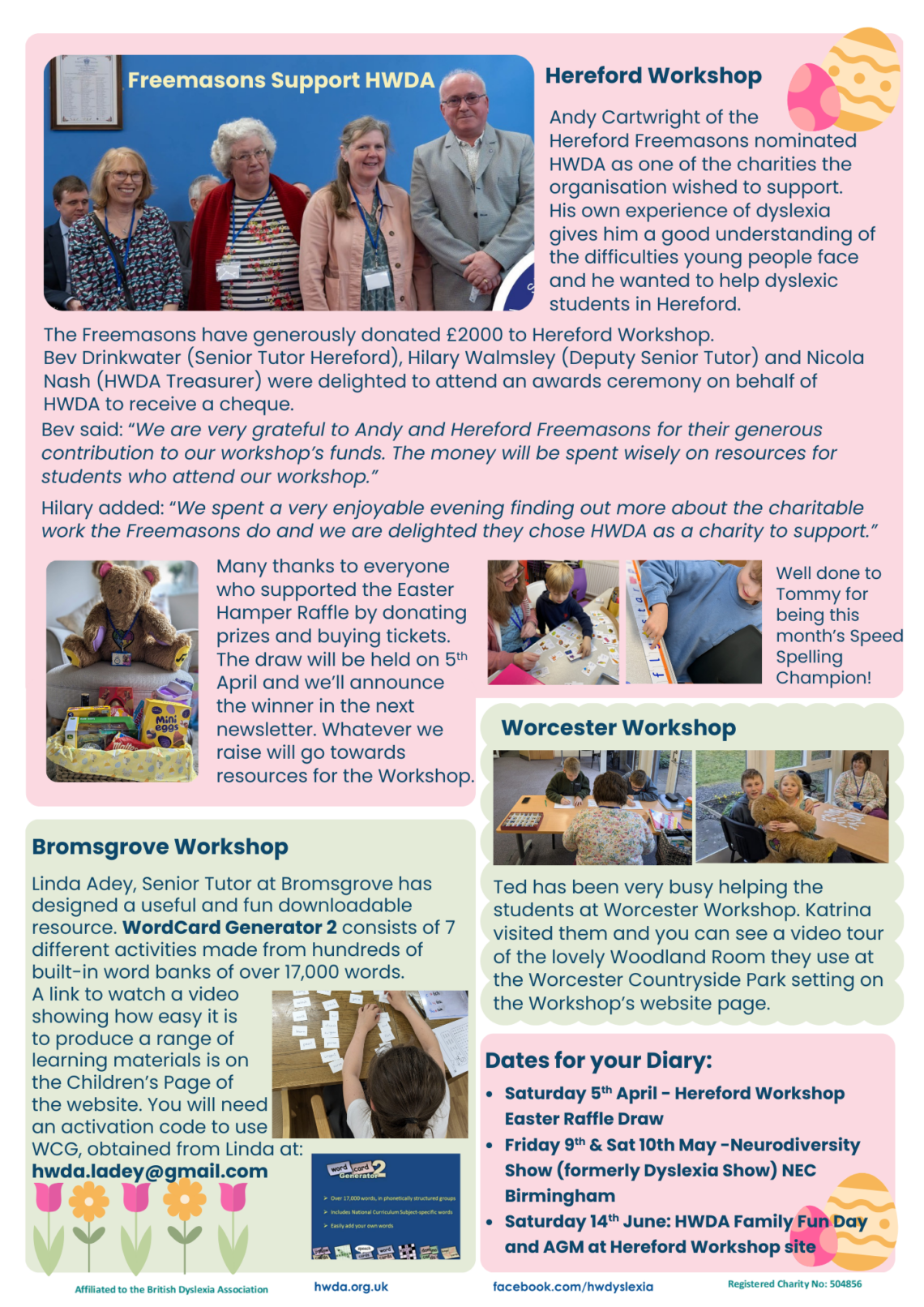
Previous Newsletters
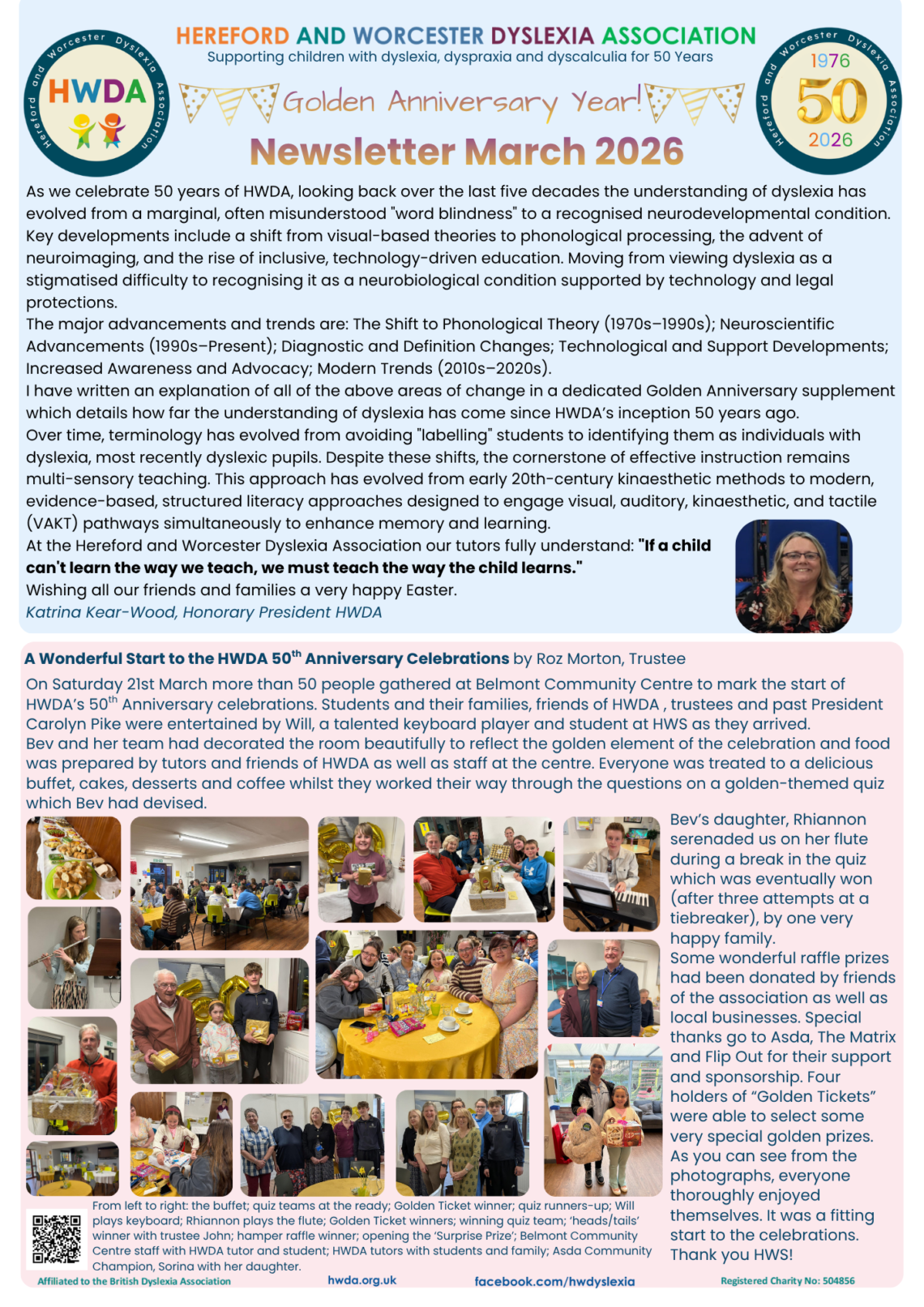
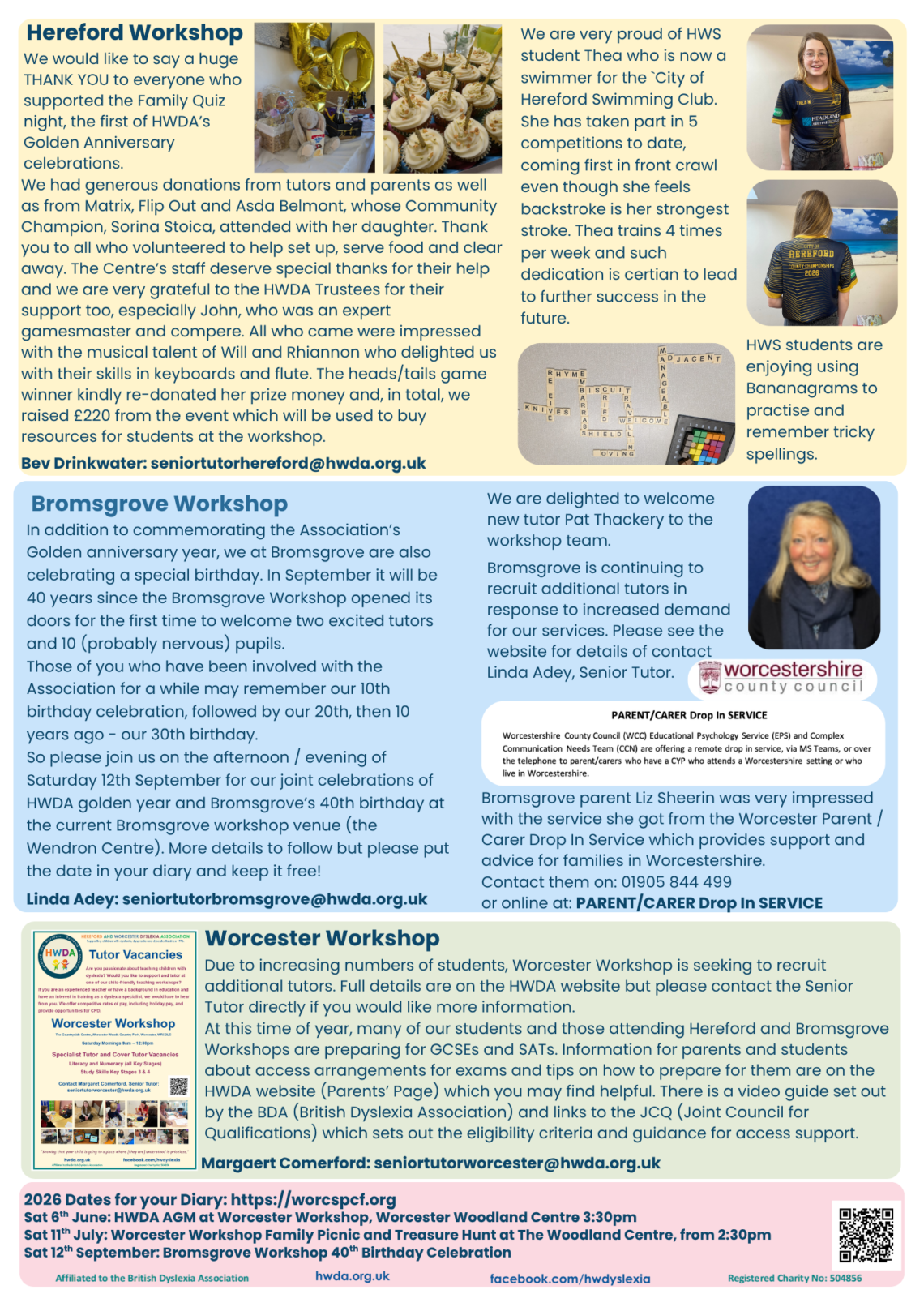
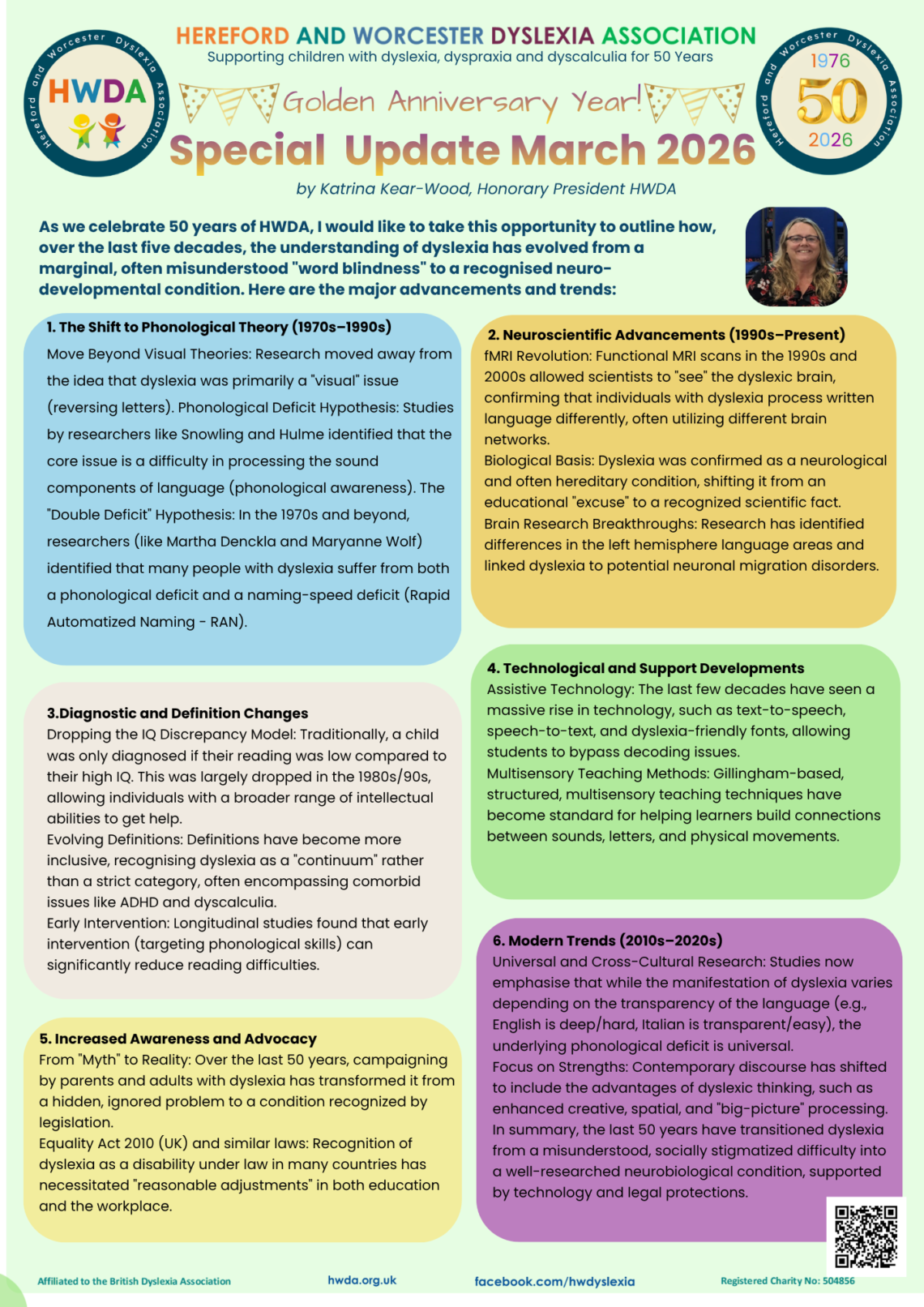
Previous Newsletters: